How Often Should You Replace Your Mattress?

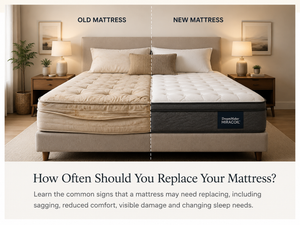
How Often Should You Replace Your Mattress?
A mattress does not have a fixed expiry date. Some mattresses remain comfortable for many years, while others may lose support or cushioning earlier due to construction, usage, body weight, care and the quality of the bed base.
Rather than replacing a mattress according to age alone, look at its physical condition and how you feel when sleeping on it.
There Is No Exact Replacement Schedule
You may hear general suggestions to replace a mattress after seven, eight or ten years. These timeframes can be useful reminders, but they do not apply equally to every product.
A high-quality mattress used by one person and properly maintained may perform differently from a guest-room mattress, a low-cost mattress or a bed used every night by two people.
Signs Your Mattress May Need Replacing
Visible Sagging or Deep Body Impressions
Some minor settling in the comfort layers can occur with normal use. However, deep impressions, uneven areas or noticeable sagging may indicate that the mattress is no longer providing an even sleeping surface.
You Regularly Wake Feeling Uncomfortable
If the mattress no longer feels comfortable, consider whether its cushioning or support has changed. Also check your pillow, bed base, sleeping habits and other possible causes.
The Mattress Feels Different from One Side to the Other
Uneven wear may develop when a mattress is not rotated, when one side carries more weight or when the underlying base is damaged.
Springs Feel or Sound Different
New or excessive noise, uneven spring response or areas that feel unstable may be signs that the internal structure should be inspected.
The Edges Have Become Unstable
If the perimeter compresses much more than it previously did or feels unsafe when sitting near the edge, the edge-support system may have deteriorated.
The Mattress Has Visible Damage
Torn fabric, exposed internal components, broken stitching, moisture damage or other structural issues may mean the mattress should no longer be used.
Your Comfort Needs May Have Changed
Even when a mattress remains structurally sound, it may no longer suit your preferences.
Your requirements can change because of:
- Changes in body weight
- A new sleeping position
- Sharing the bed with a partner
- Moving from a Single or Double to a larger size
- Preferring a softer or firmer surface
- Changes in mobility or ease of getting in and out of bed
Persistent pain, sleep difficulties or other health concerns should be discussed with an appropriate healthcare professional rather than relying on a new mattress as a treatment.
Check the Bed Base First
A damaged or unsuitable bed base can make a good mattress feel uncomfortable and may contribute to premature wear.
Check for:
- Broken or bowed slats
- Excessive gaps between slats
- Loose frame connections
- Missing or unstable centre supports
- An uneven or sagging foundation
Replacing the mattress without correcting the base may allow the same problem to continue.
How to Help Your Mattress Last Longer
Use a Supportive Base
Use a bed base that is level, stable and compatible with the manufacturer’s requirements.
Rotate the Mattress
Rotate the mattress according to the manufacturer’s care instructions. Rotating can help distribute normal wear more evenly.
Do not flip a one-sided mattress unless the manufacturer specifically states that it is designed to be used on both sides.
Use a Mattress Protector
A suitable protector helps keep the mattress cleaner and reduces exposure to spills, moisture and everyday marks.
Keep the Mattress Dry and Ventilated
Allow airflow around the mattress and avoid placing it directly onto an unsuitable, non-ventilated surface.
Avoid Folding or Bending
Unless specifically designed to bend with an adjustable base, a mattress should not be folded, sharply bent or stored in a way that may damage its internal structure.
Check the Frame Regularly
Loose fittings or damaged slats can place uneven pressure on the mattress. Inspect and tighten the bed frame periodically.
Is an Old Mattress Automatically Unhygienic?
Age alone does not determine cleanliness. The use of a protector, bedroom humidity, ventilation, spills, pets and regular care all influence the condition of the mattress.
A mattress showing moisture damage, mould, persistent odour or contamination should be assessed promptly.
Should You Replace Your Mattress During a Move?
Moving house can be a convenient time to assess the mattress because you can inspect the bed base, mattress underside and frame more easily.
Consider the cost and difficulty of transporting an older mattress against its current comfort and condition.
Questions to Ask Yourself
- Is the mattress still comfortable?
- Does the surface remain level?
- Are there deep impressions or damaged areas?
- Does the edge still feel stable?
- Is the bed base in good condition?
- Does the mattress still suit your sleeping needs?
When It Is Time for a New Mattress
Consider replacing your mattress when it no longer provides a comfortable, stable and even sleeping surface, or when visible wear and damage affect its performance.
Explore the latest mattresses from SleepMaker, MLILY and SlumberCare at Comfort For All, with a range of plush, medium, firm and super firm options available.
- Comfort for All